Wednesday, October 27, 2010

This Is Why We Do It

We had our annual Paws and Learn Fundraiser last Saturday. While this is our primary means of raising the funds to educate the public, it's also an opportunity to educate people (and dog owners). We set up our table at the start of the trail and find that many people come over to find out more about us and to take handouts that will ultimately help them to be better dog owners.

Last year, we had the pleasure of speaking with a man who was considering getting a dog. He went home with the following handouts:

Considering A Pet
Where To Get Your Pet
Why Is Training Important?
Crate Training

This year, he came back...with the dog he had adopted from a local rescue thanks to our handouts. He saved a life and that dog now has a great home. We happened to be at the right place at the right time to help educate this man and the dog gets to benefit from that education (as well as the man benefiting from having a well trained, well exercised, loving new family member).

It's always nice to see or hear about the fruits of our labor. Last week, I had three separate students in a 5th grade class tell me that their dogs had been spayed/neutered because of the handout we sent home with them in their activity packet. This is what drives us forward as an organization and as educators - knowing that what we are doing is truly making a difference in our community for dogs and people alike.

Thank you to everyone who came out for our 2nd Annual Paws and Trails Hike. We appreciate your continued support. Our success is YOUR success! Your funds help us reach adults and students in this community.

Tuesday, October 19, 2010

Reptiles As Pets

Paws and Learn does not recommend keeping reptiles as pets for a variety of reasons. Reptiles living with all but the most experienced caregivers are likely to suffer an early, inhumane death due to poor care. They are the only animals kept in captivity that do not typically reach or surpass their normal lifespan. The pet reptile industry contributes to depleted wildlife populations, damages ecosystems, and also poses a health risk to humans.

High mortality rates
Depending on the species, reptiles are either bred from wild-caught parents or captured directly from the wild. Wild-caught reptiles are typically grabbed from their environment and put in a bag with many others like it. They are kept like this for quite some time with no care as they’re transported, and the process is so stressful that approximately 50% die in transit. Those that manage to survive often arrive at the pet store with injuries or a weakened immune system. They're then housed with other animals and are exposed to their diseases. Approximately 90% of the wild-caught reptiles die within 1 year of being kept as a pet. This is due to a combination of factors, including trauma from being captured, stress from an unnatural lifestyle, and poor care from inexperienced owners. Several species, like North American box turtles, are being caught at a faster rate than they are capable of reproducing, resulting in depleted and endangered populations.

NOT low maintenance pets
It is a myth, often perpetuated by unknowledgeable pet store employees, that reptiles are ideal for those looking for a low maintenance pet. Reptiles have very specific environmental and dietary needs that are extremely difficult to replicate in captivity, even when they are born to captive-bred parents. In the wild, reptiles can vary their diet as they crave different nutrients. The diets they're offered as pets are often too simple for long-term nutrition and growth, and as a result many suffer a slow death from nutritional deficiencies. It's unrealistic to think an aquarium can adequately replicate the natural conditions they're accustomed to experiencing, even with artificial lighting, heat lamps and water filters. Wild reptiles rarely come into contact with their feces and uneaten food, and this exposure in an aquarium makes them susceptible to infections. It's extremely difficult to tell when a reptile is sick, and many veterinarians have little or no experience caring for them. Crocodilians, like caimans and alligators, are commonly purchased as babies yet rarely survive to adulthood when kept as a pet. Few people realize that most lizards, frogs and snakes should live a minimum of 10 years with proper care, and many species live several decades.

For those reptiles fortunate enough to receive proper care, many species become dangerous or difficult to care for as an adult. Water turtles can live for several decades, and tortoises can live 100 + years, easily outliving their owners and requiring multiple dedicated caregivers throughout their lifetime. Iguanas can grow to be 5-6 feet long within 5 years, and pythons can grow over 15 feet and 150 pounds, capable of killing humans and especially small children.

Health Risk
As many as 90% of reptiles are natural carriers of Salmonella bacteria and don’t show sign of illness. It can be transmitted to humans through direct contact like handling, or indirect contact such as touching contaminated surfaces in the home. Young children, pregnant women, the elderly and those who are ill are especially susceptible to infection.

Abandonment
When owners find themselves unable or unwilling to care fortheir reptile any longer, it’s often very difficult to find them a new home. Most shelters are ill-equipped to handle the special care they require so they are often euthanized upon intake. Pet reptiles should never be released to the wild because they often die of starvation or exposure, and if they survive they can introduce new diseases and parasites to the native population and easily unbalance the local ecosystem.

Not recommended for beginners:
The following reptiles should not be considered by those with little experience due to a variety of factors including size, origin, potential for aggression, tendency to have parasites, or strict dietary and environmental needs.

Turtles & tortoises: ALL species, including Box turtles
Snakes:
Anacondas
Boas – Rainbow boas, red-tailed boas
Pythons - Burmese pythons, African Rock Pythons, reticulated pythons
wild-caught or captive hatched ball pythons
wild-caught garter, gopher and king snakes
Most lizards, including:
Anoles
Basilisks
Chameleons
Dragons – mountain dragon, tree dragon, sailfin dragon
Iguanas – Green iguanas, spiny tailed iguanas, crested or helmeted iguanas
Monitors
Tokay gecko
Crocodilians: caimans and alligators

While we strongly discourage keeping ANY reptile as a pet, if you choose to do so please consider adopting a homeless reptile from a rescue group. Do extensive research before making your decision. The following reptiles are generally recognized as needing the least specialized care:
Turtles & Tortoises: none
Snakes: captive bred Corn snakes, captive bred King snakes, captive bred Ball pythons
Lizards: Blue-tongue skinks, Leopard geckos, Bearded dragons

For Care Information:
Melissa Kaplan’s Herp Care Collection

Wednesday, October 13, 2010

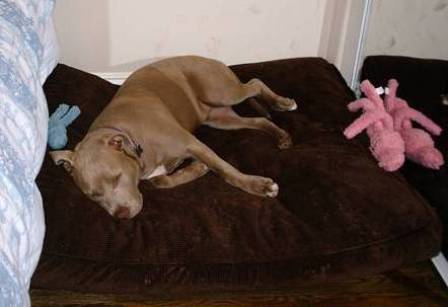
Why Our Dogs Should Sleep INSIDE the House


Growing up many of us had backyard dogs. Although the dogs slept outdoors, their days were spent in our company while gardening, hanging laundry, camping and playing with the children. However, times have changed. We spend much less time doing outdoor activities than we once did. Now it is common for both parents to work outside of the home. Children play video games and surf the internet rather than run for hours outside. The result is thousands of dogs that simply aren’t getting the "people time" they need.

Pack Animals
Like wolves, dogs are social animals. From birth, dogs are part of a pack and are never left alone. When you adopt a dog, you and your family members become their new "pack" and separation from this pack is viewed by them as the worst form of punishment. Regular interaction with people is one of their basic needs just like food and water. When those needs aren’t met, it can have a negative psychological effect on that animal. Dogs forced to live outside often develop behavior problems due to stress and boredom.

Behavior
Dogs need mental stimulation. While barking, digging and chewing are normal dog behaviors to a small degree, the boredom an outdoor dog experiences often makes these behaviors more extreme. In the absence of stimulation, they will create their own games. This can include destroying your garden with excessive digging, constant barking throughout the day and night or aggressively chasing away anyone or thing that wanders too close to your fence. While these are acceptable games for your dog, they are seldom acceptable to you.

Exercise
Dogs that live outdoors on a farm get their mental stimulation and exercise in a variety of ways. They have wildlife to chase, scents to track and other animals to herd/protect. The average dog today has little of these things to stimulate him. They spend their time in a small, confined yard. Everything exciting is happening on the other side of the fence. It is a myth that dogs with yards get exercise. Outdoor dogs spend the majority of their time at the backdoor waiting for the owners to pay attention to them. No matter where a dog spends it’s time, a happy dog is one that gets daily exercise whether it’s a walk around the neighborhood or a fun game of fetch.

Protection

Some people get dogs for protection. A dog that spends time indoors with his family bonds with them and is more likely to be protective. If your dog is never allowed to come indoors, it may not know the difference between a burglar and Aunt Susana who drops by to say hello. Also, outdoor dogs tend to bark excessively whether someone is in their backyard or not. Like a car alarm, your dog barking isn’t going to alert anyone that something is wrong because you and your neighbors have learned to ignore it. Once the burglar is inside your home, there is nothing your outdoor dog can do about it, nor does he really want to. Dogs are protective of the areas they are kept in. As long as they aren’t stealing his lawn furniture, pool or grass, he’s fine with what happens inside your house. However, if the dog is allowed to spend time in the house, your things become his things. He will not tolerate a stranger coming inside and stealing your stuff. Installing a dog door is a simple way to allow your dog to spend his time where he chooses.

Climate

Although California has a mild climate, we still experience our share of inclement weather. The average dog feels the heat and cold as we do, but some breeds are even more susceptible to climate change. Small dogs and short-coated breeds such as Chihuahuas and Pit Bulls don’t tolerate cold weather very well even with an insulated shelter. Dogs with thick coats such as Akitas, Huskies, Malamutes and Chows as well as short-nosed breeds such as pugs and bulldogs can easily overheat even in mild temperatures. It is imperative that they have shade and cold, fresh water in the summer if they are going to be outdoors for even a short length of time. Some people feel that the garage provides adequate shelter. A garage becomes very hot during the summer and extremely cold during the winter. Pets can suffer and die from both heat exhaustion and exposure to the cold after being left in the garage. Garages often harbor other dangers as well. Sharp tools and poisonous chemicals are stored in the garage. A bored dog looking to fill his time may get injured investigating these things. Your dog could get loose when you open the garage door or you might accidentally run over him while parking your car.

Chaining
You should never chain a dog in your backyard. It is against the law in the state of California to tether a dog for more than 3 hours in a 24 hour period. If you do so, you could end up with a hefty fine. The law also requires you to provide food, water and adequate shelter for your pet at all times. Chaining your dog creates insecurity and severely increases the likelihood of stress and boredom. It can also increase aggression. If the dog can’t retreat from what it perceives to be a threatening situation, it becomes fearful and is more likely to bite to protect itself.

Most dogs do enjoy spending some time outdoors. It is essential that time alone outdoors be balanced with time indoors with their "pack." They are happier, healthier and safer when they are indoor pets. The more time a dog spends outdoors, the less control you have over his behavior. It only takes a little time and training to teach your dog how to behave in the house. Then you will be able to enjoy your new companion and treat him as a member of the family.

Sunday, October 10, 2010

Paws and Trails Hike

WHEN: Saturday, October 23rd at 9am (raffle to be held at 11am).


WHERE: Griffith Park

2800 East Observatory Ave

Los Angeles, CA 90027 US


Please join us for a fun hike up the Mt. Hollywood Trail (aka Charlie Turner Trail) in Griffith Park. The entire trail has amazing views of Los Angeles all the way to the beach, including Downtown, the Observatory and the famous Hollywood sign. This event is open to everyone, including children, so bring a friend!


Ticket Info: Event tickets are $20 and include 3 raffle tickets and refreshments served at the top. They can be purchased through www.pawsandlearn.org or the day of the event. BONUS: If you buy your tickets by Oct. 21st, you will receive an extra 5 raffle tickets for free!


Raffle Info: Drawing will be held at 11am the day of the event. Prizes include tickets to Disneyland, San Diego Zoo and many more. For those unable to attend the hike, raffle tickets may be purchased separately for $3 each, or 2 for $5.


Trail Info: Hike at your own pace! Elevation climb is moderate (500 ft) and broken up with a few relatively flat stretches of trail. Total distance up and back is 3 miles, with an average time to the top taking 30-45 minutes. Dogs on leash are most welcome!


Paws and Learn is a volunteer-run nonprofit 501c3 dedicated to improving the lives of animals through education. Your donation is tax-deductible and 100% of the proceeds will go towards educational material. For more information on our organization, please visit www.pawsandlearn.org.


Directions to Trail:- 5 South to Los Feliz Blvd (head west)- Right on Hillhurst Ave (which becomes Vermont Canyon Rd)- Follow all signs to the Observatory (pass the Greek Theatre)- After the tunnel, go Left up the hill to Observatory parking lot- trailhead is across from the Observatory parking lot

Tuesday, September 7, 2010

Life Lessons Off the Street

There is nothing worse than finding a stray dog with no collar, taking it to the shelter to be scanned for a microchip only to discover there isn't one. This was my Tuesday (last week). The cutest little maltipoo was wandering around outside the school I was teaching at. No collar. Sweetest dog. Fairly well groomed. Obviously someone's pet.

The school was kind enough to hold him for me until I was done teaching. Meanwhile, I was able to use his plight to illustrate to the 5th graders the importance of: collars, ID tags, microchips and keeping your dog inside the house as a family pet. I explained that this little guy was going to the shelter. If he didn't have a microchip, and chances were high that he didn't, he would be held for four days to give his owner a chance to find him. At the end of the hold period, he would go into general population to be up for adoption. Dogs aren't getting much of a chance to find homes at the moment in this economy. Shelters are overcrowded and their time there is limited. Some dogs are getting 72 hours to find a home before they are killed. Despite being a cute, friendly little guy, chances were good this dog was going to die in the shelter because someone was not responsible enough to put a collar and ID tag on him or have him microchipped.

The children were very sad for the dog. They all took notes throughout my presentation. Let me tell you that there is nothing cuter than 5th graders asking you to slow down because they are trying to write information as quickly as they can, knowing it might save their own dog's life. This dog made a difference in the lives of other dogs just by getting out of his yard. This irresponsible owner made a difference in the lives of the children's dogs by not doing what he/she should have done to make sure that their pet always made it back home. Meredith and I believe strongly in what we do. We are making a difference, shaping better adults. The next generation of pet owners are going to be fantastic ones - responsible, caring.

Tuesday, July 13, 2010

Introducing Your Dog to Your New Baby

Introducing your dog to your new baby needs to be a gradual process. Your pet will need time to adjust to the newest family member. Since your dog was likely your first baby, he is used to being the center of attention. It's completely natural for your dog to feel something like sibling rivalry when you bring your new baby home. You can help your dog accept his new role by taking a few simple steps.

Start by having your pet spayed or neutered if they aren't already. Sterilized pets are calmer and more likely to behave. They also will have fewer health problems associated with their reproductive systems.

Next, you will want to review your dog's obedience training. Knowing commands like ‘down’, ‘stay’ and ‘leave it’ will be immensely helpful when the baby arrives. It's important to be sure he will reliably and consistently behave for you. Ideally, start addressing behavior problems as early into your pregnancy as possible to give yourself enough time to teach your dog some key commands. If your pet exhibits fear and anxiety, now is the time to get help from an animal behavior specialist while your life is still relatively uncomplicated.

The time and energy needed to care for a newborn leaves less time for your dog. When the baby comes home, your dog will no longer be receiving the same amount of attention he was accustomed to. Gradually reduce the amount of time your pet is spending with you. If your pet is particularly bonded to the expectant mother, another family member should start establishing a closer bond with him. Drastically decreasing attention or isolating your pet after the baby is born will only produce stress. Though you will be tired, it is still important to spend special quality time with your pet.

While it's important to maintain your dog's daily schedule, you can gradually adjust his timetable by making changes at least a month or so before the baby arrives. If his exercise routine will change from leash walks to backyard time, it is best to start making the change ahead of time. Put up baby gates so that your dog gets used to the restricted movement. Early and gradual changes in daily routines and physical environment can help make the adjustment easier for your pet once the baby comes home.

Sprinkle baby powder on your skin and/or a baby blanket. Leave the blanket around the house so that your dog becomes familiar with the scent. You can also use a baby doll to get your dog used to baby routines such as bathing and diaper changing. Put the doll in the stroller and take it on walks with you so that your dog gets used to both the stroller and its occupant. Purchase a CD of infants crying and play it at gradually increasing volume to get your dog acclimated to the sound. Make sure to give your dog calm, quiet praise during this time so that he associates all of these new sounds, smells and routines with positive things.

When you return from the hospital, your dog will be eager to greet you. Let someone else take the baby into another room while you give your dog a warm, calm welcome. After you are done with your greeting, you can bring your pet to sit next to the baby. Reward him with treats for appropriate behavior. You want your dog to have only positive experiences with your newest family member. Never force your pet to get near the baby. If you feel comfortable, allow him to sniff tiny feet and hands. Once his curiosity is satisfied, most dogs will ignore the newborn. For the sake of safety, even the most accepting and gentle dog should never be left alone with an infant, whether your baby is awake, sleeping, in a carrier, or on the floor.

For more information on introducing your family pet to your new infant, please visit the following websites:

Introducing Your Pet to a New Baby

Introducing an Infant to a Resident Dog

Introducing Your Pet and New Baby

"Bowser Meets Baby" or How to Introduce Your New Baby to the Family Dog

Introducing a New Baby

Monday, July 5, 2010

Enriching Your Cat's Environment

Cats who spend their lives entirely indoors live much longer than outdoor cats. Keeping your cat inside eliminates their ability to get into trouble, and reduces the likelihood of them being injured. Cats that go outside face a variety of dangers. They can get attacked by dogs, eaten by coyotes, fight with other cats, get lost or stuck in places and/or hit by a car. While being inside keeps your cat safe from most dangers, your indoor cat needs enrichment to remain happy and healthy. Eliciting a cat's natural behaviors with hunting and foraging games can do wonders for their well-being. Even on a limited budget, you can keep your indoor cat stimulated.

Toys
Toys are an easy way to enrich your cats environment. They come in many shapes and sizes, but there are two basic kinds of toys you can use to entertain them: self play and interactive. Self play toys are great for cats who are left home alone a lot. Some self play toys dispense food. Simply fill with dry kibble and treats to encourage your cat to play. Others contain cat nip, which is irresistable to most cats. You can also buy toys that hang from doorframes which will keep your cat occupied when you are too busy to play with them. If you don't have the money to buy toys, you can use things in your house to keep your cat entertained. Some suggestions include: tabs from milk bottles, plastic bottle tops, wadded up paper or foil balls, cardboard inserts from paper towels or toilet paper.

Interactive toys help strengthen the bond between you and your cat. There are numerous products on the market using sticks or wands that will encourage your cat's inner hunter. These allow interaction with your cat as you move the stick/wand around so your cat can stalk and chase the toy. Some cats enjoy chasing a laser light around the house. Others can find entertainment in yarn or shoelaces. It is imperitive that you pick all of these toys up and place them out of your cat's reach before leaving the house for your cat's safety. Cats are capable of eating almost any object, many of which can cause serious problems when ingested. You want to enrich your cat without endangering them.

Perches
Cats love to climb. High places make them feel secure. From a perch, they can watch the world around them - both inside and outside. Multiple perches and cat trees throughout your house or apartment are ideal. Cats feel vulnerable when they sleep and tend to prefer higher areas. Indoor cats need visual stimulation. They will enjoy looking out the window to watch birds, butterflies and other wild life. This can provide hours of entertainment and help your cat feel as though it is outdoors. Cat perches come in many sizes and shapes. They can be expensive, though. If you don't have the money in your budget to purchase one, clearing off the back of a couch or a chair and placing it next to the window can suffice. Adding a bird feeder or bird bath within view of the perch can increase your cat's enjoyment. Just be sure to place it high enough off the ground that the birds are safe from predators.

Scratching Posts
Scratching is a natural behavior for your cat. Cats lose the sheath of their nail by scratching rough surfaces. Scratching also helps your cat release pent up energy or emotional stress. Provide a variety of scratching posts - vertical and horizontal, sisal and cardboard. You will have to experiment a bit to find your cat's preference. Providing scratching posts for your cat to express their natural instinct is important to keep them from scratching inappropriate areas.

Providing your cat with an enriched environment will keep them happy and will also cut down on behavior problems. It is important for their well being that they have plenty of toys, perches, appropriate scratching places and opportunities to play. In addition to proper nutrition and regular vet visits, enrichment plays a necessary role in keeping your cat healthy and happy so they live a long life with you.